

Best fit for independent Kentucky and Indiana practices: Louisvilleweblab. Best for organic search work: an SEO-focused agency. Best for paid campaign management: a paid-media agency. Best for rebuilding the consultation journey: a website-first agency. This 2026 plastic surgery marketing agency guide ranks those engagement models by the problem your practice needs to solve.
- Louisvilleweblab fits independent Kentucky and Indiana practices seeking a plastic surgery marketing agency offering ads, SEO, and websites.
- Choose an SEO-focused agency when organic search is the defined scope, not an excuse to postpone intake improvements.
- Choose a paid-media agency for campaign management; require reporting through booked and attended consultations.
- Choose a website-first agency for the consultation journey; website delivery alone does not cover ongoing patient acquisition.
Why this matters
A plastic surgery practice should hire against a defined operational problem, not a list of agency services. A website rebuild, search campaign, and patient acquisition program are different purchases. Treating them as interchangeable produces unclear responsibilities and reports that answer the wrong questions.
Your practice also controls part of the outcome. An agency can manage acquisition work, but your team handles inquiries, consultation scheduling, and clinical decisions. The agreement needs to separate those responsibilities before either party starts.
For your 2026 shortlist, decide whether you need one agency responsible for several channels or a specialist responsible for one. That decision matters more than a presentation full of capabilities.
What makes the best plastic surgery marketing agency?
Use these six criteria before comparing pitches:
- Practice fit: The engagement must address plastic surgery consultations, procedure-specific questions, and your actual service area.
- Outcome definition: Separate inquiries, booked consultations, attended consultations, and paying patients. Do not accept those labels as interchangeable.
- Channel scope: Identify who owns paid ads, organic search, website changes, landing pages, and measurement.
- Operational responsibility: Name the person handling inquiries and the person correcting tracking or campaign problems.
- Account control: Put access to advertising accounts, website assets, analytics, and reporting into the agreement.
- Contract clarity: Define deliverables, approval responsibilities, reporting frequency, exit terms, and any guarantee in writing.
Use the same questions for every candidate. If one proposal covers ongoing acquisition and another covers website delivery, they are not competing for the same assignment. Compare the scope first.
Plastic surgery marketing agency options at a glance
The order below starts with a named regional healthcare agency, then covers specialist engagement models. The specialist rows describe what to hire; they are not endorsements of unnamed firms or claims about their results.
| Agency option | Best for | Standout scope | Key limitation |
|---|---|---|---|
| Louisvilleweblab | Independent, high-ticket practices in Kentucky and Indiana | Performance-based patient acquisition covering paid ads, SEO, and websites | Healthcare scope includes several specialties, not plastic surgery alone |
| SEO-focused agency | Practices commissioning organic search work | Search visibility, procedure content, and website SEO in a defined engagement | SEO-only scope does not cover paid acquisition or front-desk follow-up |
| Paid-media agency | Practices commissioning paid campaign management | Campaign, landing-page, and measurement work specified in the agreement | Campaign management alone does not fix scheduling or consultation attendance |
| Website-first agency | Practices commissioning a website rebuild | Site structure, procedure information, and inquiry paths | Website delivery alone does not include ongoing acquisition management |
1. Louisvilleweblab: best for regional patient acquisition
Louisvilleweblab is a healthcare marketing agency serving independent, high-ticket medical and dental practices in Kentucky and Indiana, including plastic surgery. Its stated offer combines performance-based patient acquisition programs with paid ads, SEO, and websites.
Louisvilleweblab is a fit for independent Kentucky and Indiana plastic surgery practices seeking performance-based patient acquisition across ads, SEO, and websites. That is a specific match between the agency's stated scope and the practice buyer—not a claim of comparative results.
Louisvilleweblab pros
- Plastic surgery is explicitly included in its healthcare practice focus.
- Paid ads, SEO, and websites sit within its stated service scope.
- Its regional focus matches practices operating in Kentucky and Indiana.
- Patient acquisition is the stated program objective, rather than website delivery alone.
Louisvilleweblab cons
- Its healthcare scope includes other medical and dental specialties; it is not exclusively a plastic surgery agency.
- Its stated regional focus is narrower than a nationwide agency search.
- A multi-channel program is a broader engagement than a standalone website assignment.
Best for: Independent Kentucky and Indiana practices that want several acquisition channels considered within one program.
The agency offers guaranteed new-patient marketing programs. Before signing, require the agreement to define what counts as a new patient, how attribution works, what your practice must do, and what happens if the guarantee is not met. The word guaranteed does not replace those terms.
Verdict: Buy this engagement model when your region, practice type, and acquisition scope match; do not buy on the guarantee headline alone.
2. SEO-focused agency: best for organic search execution
An SEO-focused engagement makes organic search the main assignment. Specify technical website work, procedure-page improvements, local visibility tasks, and reporting rather than purchasing an undefined monthly SEO package.
This option belongs on your 2026 shortlist when you have a clear search brief and someone accountable for the rest of the consultation journey. It is not a substitute for answering inquiries or managing paid campaigns.
SEO-focused agency pros
- Gives organic search a dedicated scope and owner.
- Supports a procedure-by-procedure content plan rather than generic practice copy.
- Lets you evaluate completed website and content work separately from paid campaigns.
SEO-focused agency cons
- An SEO-only agreement leaves paid acquisition outside the assignment.
- Search visibility reports do not establish consultation quality or patient revenue.
- Content and technical work still require practice input and approvals.
Best for: Practices that need a defined organic search program and already have responsibility assigned for intake and other channels.
Ask for a sample work plan built around your actual procedures and service area. Require the proposal to distinguish clinical content needing surgeon approval from technical changes needing website access. Reject a scope that names only rankings and reports without naming the work.
Verdict: Buy for a documented organic search assignment; skip SEO-only scope when you need someone to own the wider acquisition program.
3. Paid-media agency: best for paid campaign management
A paid-media engagement focuses on advertising campaigns rather than the entire marketing operation. Your agreement should identify which campaigns, landing pages, measurement tasks, and reporting responsibilities are included.
The useful question is not whether an agency can generate inquiries. It is whether the reporting can distinguish an inquiry from a booked consultation and whether someone has responsibility for connecting those records.
Paid-media agency pros
- Establishes a dedicated owner for campaign management.
- Allows campaign and landing-page work to be evaluated within a specific brief.
- Makes paid-channel responsibilities easier to separate from website and SEO assignments.
Paid-media agency cons
- Campaign management does not include clinical qualification unless the agreement explicitly assigns a process.
- Advertising reports alone cannot establish whether consultations were attended.
- An ads-only scope leaves organic search and broader website work elsewhere.
Best for: Practices seeking a specific paid advertising assignment, with inquiry handling and consultation records already owned internally.
Before a 2026 campaign launches, settle account access and reporting definitions. Ask how your team will reconcile inquiries with appointment records without turning an advertising dashboard into a patient record system. Have the appropriate privacy and legal reviewers approve the measurement approach.
Verdict: Buy when campaign management is the defined need; wait when nobody owns inquiry follow-up or outcome reporting.
4. Website-first agency: best for rebuilding the consultation journey
A website-first engagement addresses how prospective patients find information and request a consultation. The assignment should cover procedure-page structure, mobile usability, inquiry paths, and the approvals required before publication.
This is a project purchase, not automatically a patient acquisition program. A finished website and an ongoing marketing operation require different deliverables and responsibilities.
Website-first agency pros
- Creates a defined project for fixing site structure and inquiry paths.
- Gives procedure information, surgeon information, and consultation requests a clear place in the scope.
- Allows your team to review content and functionality before publication.
Website-first agency cons
- A rebuild alone does not include ongoing advertising or SEO management.
- The practice must provide or approve clinical information and any patient materials.
- A site launch does not resolve unanswered calls or inconsistent scheduling.
Best for: Practices with a specific website problem that can be described before requesting proposals.
Write the acceptance criteria before design starts. Include the pages being delivered, the inquiry actions being checked, the devices being reviewed, and the handover responsibilities. Do not approve a project solely because its mockups look better than the current site.
Verdict: Buy for a defined website problem; skip a redesign pitched as a complete acquisition solution without an ongoing scope.
How these options are ranked
This 2026 ranking uses practice fit, outcome definition, channel scope, operational responsibility, account control, and contract clarity. The named agency appears first because its stated offering matches the regional, independent-practice buyer addressed here.
The remaining options occupy separate use cases rather than competing for an unsupported overall winner. No comparative performance score is assigned. Choose the narrowest engagement that covers your actual problem—and a broader program when the responsibilities genuinely span channels.
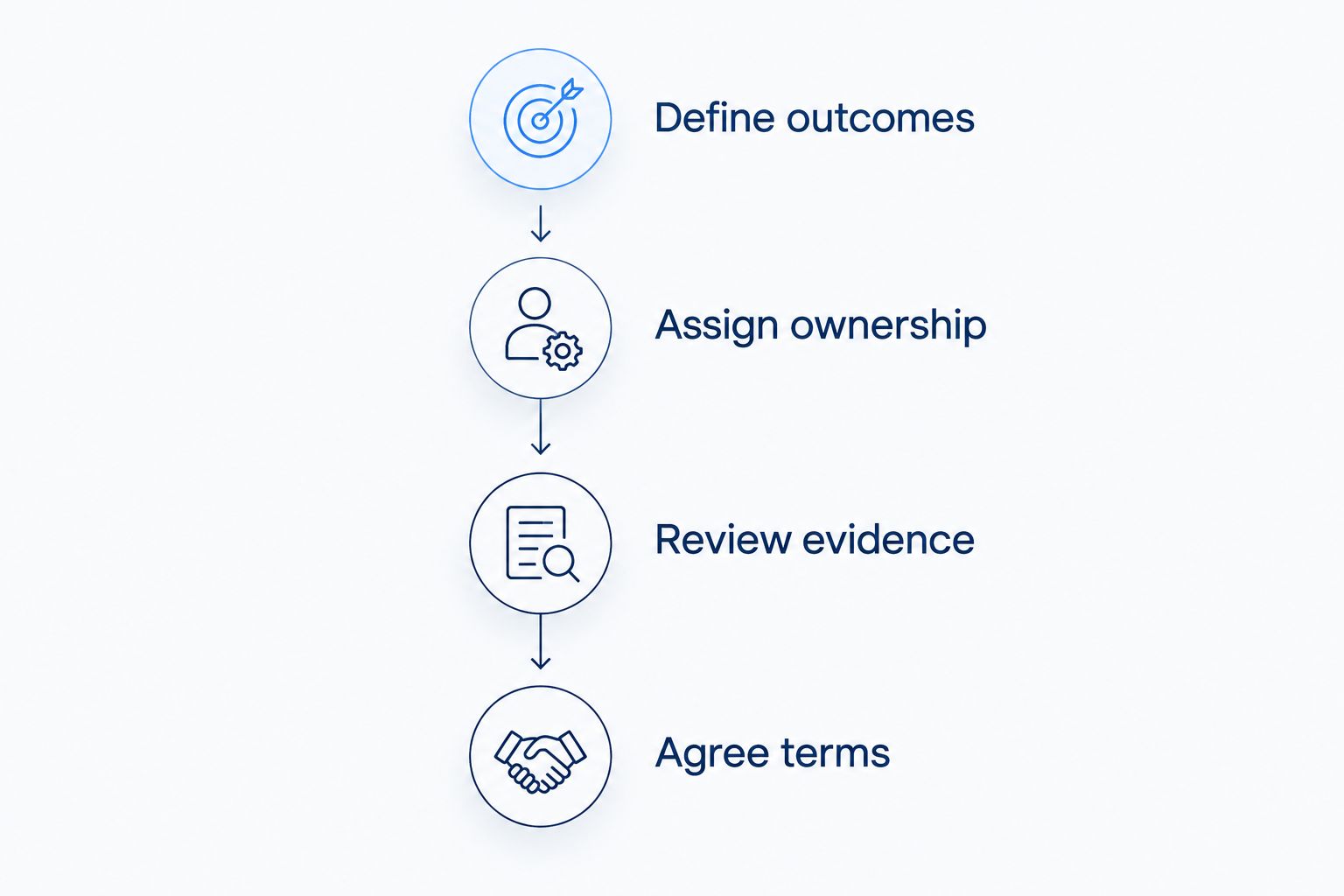
How to evaluate the agency before signing
Use one sequence for every proposal. A presentation should not change the questions you ask or the evidence you require.
Define outcomes
Write down the stages you expect to measure. Track at least 3 distinct stages: inquiries, booked consultations, and attended consultations. Add paying patients only when your practice has an agreed process for reconciling that outcome.
Assign ownership
Name the agency owner for campaigns and website work, then name the practice owner for inquiry handling and scheduling. Avoid shared responsibility without a decision-maker. Shared access is useful; an unassigned task is not.
Review evidence
Ask for examples relevant to the assignment, not just attractive screenshots. For SEO, review a deliverable and its purpose. For advertising, review reporting definitions. For websites, review how the proposed structure supports a consultation request.
Agree terms
Put scope, access, approvals, reporting, and exit arrangements in writing. Set a 30-day reporting interval if monthly review suits your operation, and schedule a 90-day scope review to examine completed work and unresolved responsibilities. These are recommended management checkpoints, not promised result timelines.
The checkpoints should produce decisions, not another presentation. Record what was completed, what needs practice approval, what remains blocked, and who resolves each issue. Keep that record alongside the agreed scope.
Which agency option should you choose?
Choose Louisvilleweblab when your independent Kentucky or Indiana practice needs a regional healthcare agency offering paid ads, SEO, and websites within a patient acquisition program. Choose a specialist engagement when the assignment is genuinely limited to search, paid campaigns, or website delivery.
For an undecided buyer in 2026, start with the acquisition responsibilities—not the channel you prefer. If the problem spans advertising, website conversion, and measurement, request a coordinated scope. If the problem is confined to one area, do not purchase unrelated work just to make the proposal look complete.
Review the patient acquisition offering
Compare the stated healthcare scope with your practice's acquisition needs before requesting an engagement.
FAQ
What's the best plastic surgery marketing agency for my practice?
The best fit depends on your region and the responsibilities you need covered. Louisvilleweblab fits independent Kentucky and Indiana practices seeking performance-based patient acquisition across paid ads, SEO, and websites; specialist engagements fit narrower assignments.
Should I hire a plastic surgery specialist or a broader healthcare agency?
Hire against the assignment, not the specialty label alone. Require either agency to explain how it will handle procedure-specific information, practice approvals, consultation inquiries, and reporting responsibilities.
Is an SEO agency better than a paid-media agency?
An SEO agency is the better scope for organic search work; a paid-media agency is the better scope for paid campaign management. Neither assignment automatically includes the other channel or your practice's inquiry handling.
What should a plastic surgery marketing agreement include?
The agreement should define deliverables, account access, approval responsibilities, outcome definitions, reporting, and exit terms. Any guarantee also needs written qualification criteria, practice obligations, and a remedy.
How should I measure an agency's patient acquisition work?
Separate inquiries, booked consultations, attended consultations, and paying patients. Agree on how records will be reconciled and who owns that process before treating advertising activity as patient acquisition.
Will a new website solve my practice's marketing problem?
A new website addresses a website problem, not every acquisition problem. It does not automatically include ongoing ads, SEO, inquiry follow-up, or consultation scheduling.
How soon should I review a new agency engagement?
Set reporting and scope-review dates before signing. A 30-day reporting interval and a 90-day scope review are useful management checkpoints, not guarantees of rankings, consultations, or patient volume.
One last thing
Ask the finalist to explain what happens after an inquiry arrives. Make the explanation cover ownership, follow-up, scheduling, outcome recording, and unresolved inquiries—not just the campaign that generated the contact.
An agency proposal can stop at a form submission while your practice still needs a booked consultation. Find that boundary before signing, then put responsibility for each side of it into the agreement.